You are heresocial media
social media

Learning to Let Go: Changing Patterns of Participation and Learning through the Digital Collections of the Royal Commission on the Ancient and Historical Monuments of Scotland (RCAHMS)
Michela Clari, University of Edinburgh, UK
Philip Graham, RCAHMS, UK
http://www.rcahms.gov.uk
ArtClix Mobile App at the High Museum of Art
Nicole Cromartie, High Museum of Art, USA
Abstract

Digital Media In Everyday Life: A Snapshot of Devices, Behaviors, and Attitudes Part 1: Mobile Device Ownership
Steven Beasley and Annie Conway, Museum of Science and Industry, Chicago, USA
http://msichicago.org/digitallife
Abstract
Shifting the Limits - How to go beyond one-way guiding in Museums with Fluxguide & "visitor-generated content“ on-the-spot
Technology-based guiding in museums still lags behind its potential. This is not because there are no efforts towards new mobile technology. In contrary, plenty of "iPod touches" and similar devices populate exhibition spaces around the world.
Your Photo Here: An Online Contest Solution
For several years, the Museum of Photographic Arts (MOPA) has experimented with using contests to interact with visitors, encourage creativity, and expand awareness about special exhibitions and collections.These contests were typically done with private judging because there were not any easy, inexpensive means of launching online contests with public voting.
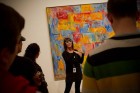
ArtClix Mobile App at the High Museum of Art
Julia Forbes (Head of Museum Interpretation) and Nicole Cromartie (Coordinator of Interpretation) will present ArtClix, the High Museum of Art's mobile app. Developed in collaboration with Second Story from Portland, OR for the Picasso to Warhol exhibition, ArtClix incorporates social media, community conversation, and visual recognition.
What do we really know about social media in museums?
With years of collective experience in social media engagement, many museums are stopping to ask themselves: what have we really learned about the audiences we are connecting with? Have we formed more meaningful relationships with our community and in the process, are we better serving the missions of our institutions?
Museums in perspective: share and discuss daily data about museums and their audiences.
It is common practice among museums to publish quarterly or annual reports that include the museum attendance figures, online visits and more recently information about their social network activities. These figures are generally accepted as indicators of the effectiveness of museums activities both online and offline.
Learning to Let Go: Changing Patterns of Participation and Learning through the Digital Collections of the Royal Commission on the Ancient and Historical Monuments of Scotland (RCAHMS)
For over 100 years RCAHMS has been charged with recording, interpreting and sharing information on the built heritage of Scotland. In recent years the institution has been involved in a number of online initiatives, both independently and in partnership with other organizations.
MEMA : using tags, posts, and tweets to help users build a personal narrative of the Teeny Harris Exhibition
Museum visitors have different perspectives and interests based on how they relate their personal experiences and knowledge to the objects on display in the museum. Many museums and cultural institutions would like to collect these perspectives to complement and augment the content of the museum’s official interpretation.
Creating Your Social Media Strategy: A Workshop
As cultural consumers spend more time on social media platforms, thorough and thoughtful institution-specific social media strategies have become a communications necessity. This workshop is designed to guide participants in developing actionable social media strategies for their respective organizations, building from industry case studies, peer best practices, and audience research.
State-of-the-Art: German Museums on the Social Web – Benefits and Effects of Social Media for Museum Education and Learning
This demonstration will focus on the questions “What kind of Social Media and Social Software have already been used for Museum Education Services on-line?” and “How do German Museums use the Social Web to enhance their Museum Education Services?”

The Use of Social Media in the Danish Museum Landscape
Nanna Holdgaard, IT University of Copenhagen, Denmark
Abstract
This paper examines Danish museums' use of social media on their own websites and on external sites like Facebook. The paper takes its point of departure in a study of the Danish online museum presence through an analysis of the museums' websites and presence at social media sites. The results of exploring 123 Danish museum websites and social media presences show that half of the Danish museums use social media - art museums being the most active among the Danish museums. Despite the fact that half of the Danish museums are on Facebook and write blogs, the majority of museums on a general level communicate with a low degree of user interaction, participation and engagement. The paper concludes that Danish museums in general use social media in order to attract more visitors to the physical museums.
Keywords: museum, online presence, social media, Facebook, Denmark

Exploring Heritage in Participatory Culture: The MuseumApp
Dick van Dijk, Waag Society, The Netherlands
http://www.waag.org
Abstract
The development of the MuseumApp in so-called 'Locative Labs' – a short, repetitive, interdisciplinary and intense collaboration, 2 days per week, for 6 weeks – took place in a unique meeting of curators, media professionals, concept developers and technical colleagues in the Amsterdam Museum and Waag Society. The joint development is based on experiment: rapid prototyping and testing of city tours; and on the spot content development. The Lab setting is one of the methods used by Waag Society to do creative research: explore interaction principles and demo innovative solutions in a real setting, with real stakeholders and real users.
The MuseumApp is a first step in creating a GPS-based, location aware heritage platform on which museums can create their own multimedia city tours and location-based games: connecting history and current events to locations in the city in an interactive and fun way, allowing the users to be the curators of their own experiences. They can also publish their own images, comments or suggestions related to the tour to other audiences on other (social) platforms, such as Facebook and Twitter.
In the Labs the partners explore novel media practices as a new way to engage audiences with heritage. Connecting it to personal accounts and social network communities might help in getting more, new, different audiences meaningfully involved.
Keywords: locative media, social media, creative research, user experience, narrative

Tag! You're It! What Value Do Folksonomies Bring To The Online Museum Collection?
Susan Cairns, The University of Newcastle, Australia
Abstract
As growing numbers of museums invite users to digitally tag online collection objects with key words, it is timely to examine the value that this practice can bring to the sector. These tags in their aggregate are known as ëfolksonomiesí and are broad user-derived classifications that are, at their heart, a form of communication (Huang & Chuang, 2009). As a collaborative process with no hierarchical structure (Cameron & Mengler, 2009), folksonomies stand in opposition to traditional museum taxonomies, and present museums with new opportunities for gaining insight into, and interacting with, audiences. Further, through recording evolving language and tag behaviour, folksonomies have the potential to become autonomously important to the museum in its study of people and written historical documentation. This conceptual paper will present an exploratory examination of the value that folksonomies provide to the museum and gallery sector in the digital age. It will demonstrate that incorporating folksonomies with traditional taxonomic museum classification systems provides the museum with an important new way through which to maintain and grow its relevance in the digital age.
Keywords: folksonomies, museum documentation, social media, tagging, taxonomy